
Why even disruptors are coming under pressure and which strategies help against ever shorter innovation cycles
Article
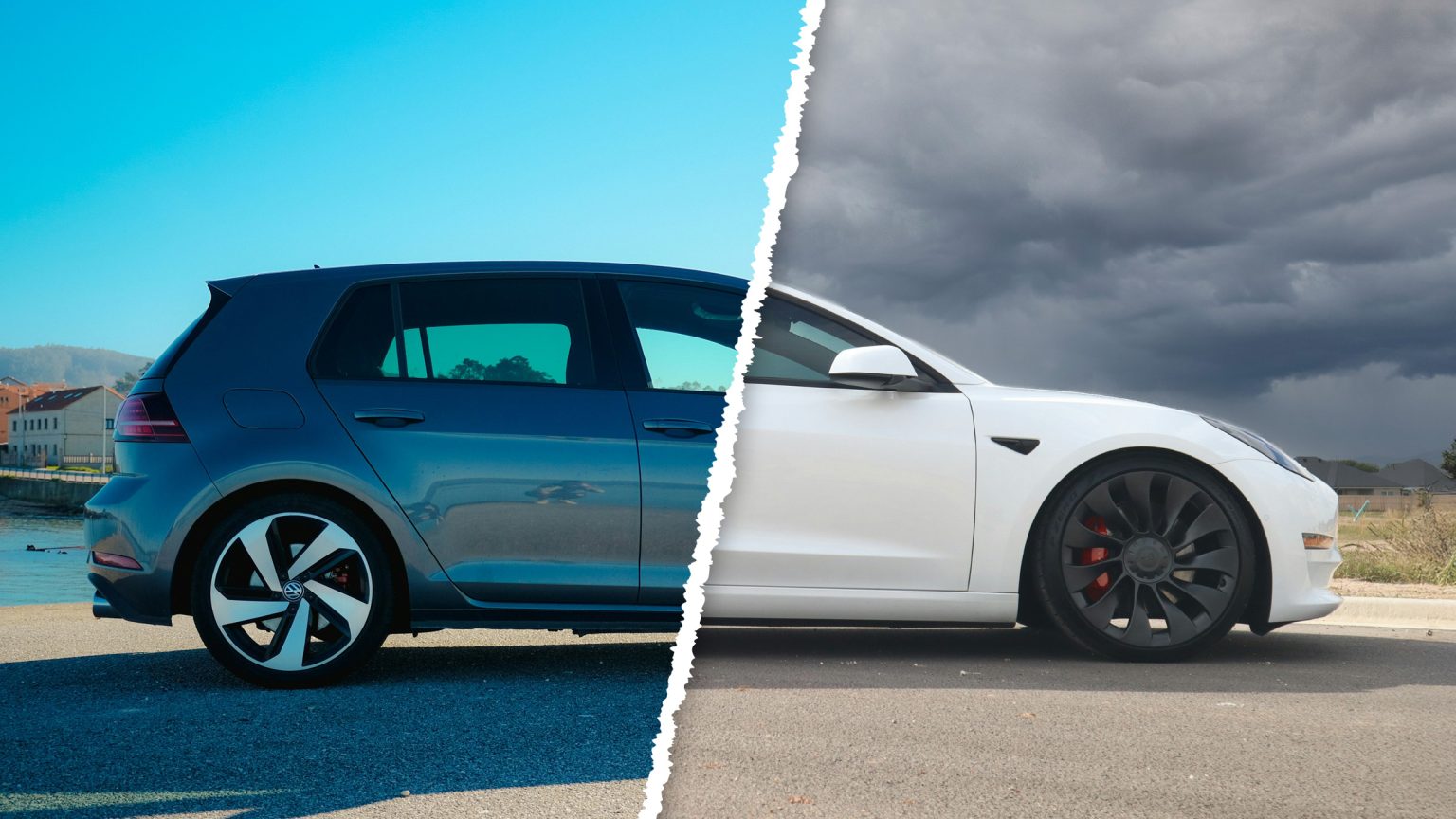
Technological upheavals no longer occur in generations, but in ever shorter waves. As a result, even companies that have just redefined a market often find themselves under pressure just a few years later. The automotive industry is a particularly visible example of this: Tesla disrupted the classic OEM logic with software-driven vehicles, Chinese manufacturers such as BYD and NIO scaled faster and cheaper, and now even they are struggling with overcapacity and declining margins. The real management question is therefore no longer: Who has the next innovation? But rather: How can a company remain adaptable in the long term when competitive advantages are becoming increasingly short-lived?
Industries rarely change in a linear fashion. Instead, there are usually bursts of innovation that displace existing market leaders and create new winners. In the past, this process took decades. Today, it takes just a few years. Historical examples clearly illustrate this pattern: quartz watches displaced mechanical manufacturers, digital cameras replaced analog film, and assembly line production revolutionized vehicle manufacturing. What is new today is the speed at which these changes are taking place. Digitalization, software, and global supply chains make it possible to roll out new business models almost immediately worldwide. Competitive advantages are thus shrinking from decades to a few years. The automotive industry is currently undergoing this acceleration in fast motion.
Tesla reintroduced the car not as a mechanical product, but as a digital platform. Functions are activated via software, updates are rolled out continuously, and development cycles are massively shortened. While traditional manufacturers think in terms of model updates every few years, Tesla operates more like a software company. And the figures show the effect: Deliveries rose from around 50,000 vehicles in 2015 to over 1.8 million vehicles in 2023. At times, the stock market value exceeded the combined market capitalization of several established OEMs. Tesla proved that speed and software expertise beat incremental optimization. But disruption is not enough for long-term market leadership.
Chinese manufacturers adopted many of Tesla's technological principles, but combined them with government support, integrated supply chains, and extremely rapid industrialization. The competitive advantage thus arose less from innovation than from the speed of implementation. According to the International Energy Agency, China accounted for around 60% of all electric vehicles sold worldwide in 2023. BYD delivered over two million electrified vehicles and at times surpassed Tesla in terms of volume. At the same time, the prices of many models were significantly lower than Western offerings, in some cases 30-50% cheaper. This phase shows a clear pattern: it is not the innovator who automatically wins the market, but the one who scales technology the fastest and most cheaply. But even this model is now reaching its limits. Overcapacity, aggressive price wars, and declining margins are putting pressure on manufacturers, and even these competitive advantages are becoming increasingly short-lived.
And so the next wave is already on the horizon. However, the coming transformation will no longer be driven primarily by powertrain technologies, but by software, data, and digital services. Vehicles are evolving into “software-defined vehicles” whose functions are activated via updates or subscriptions. Market studies by McKinsey & Company and the Boston Consulting Group estimate that by 2030, around 25–30% of automotive profits could come from software and service revenues. At the same time, the International Energy Agency forecasts that electric vehicles will account for 40–50% of all new registrations worldwide by 2030, and even more in China and parts of Europe. Added to this are new business models such as mobility-as-a-service, fleet operation, and autonomous systems. Competition is thus shifting from unit sales to platform logic. Whoever controls customer access, data, and software will also control value creation in the future. The car is thus becoming less of a product and more a part of a digital ecosystem.
The key driver is software. Hardware grows linearly: more production requires more equipment. Software, on the other hand, scales exponentially: a new feature can be rolled out worldwide without the need for additional factories. This logic has two effects: first, growth rates increase massively. Second, the lifespan of competitive advantages shrinks. What is unique today may be standard tomorrow. Transformation is thus no longer a project, but a permanent state!
For finance and transformation leaders, however, this is not a technological issue but a business challenge. Shortened cycles increase the risk of misinvestments, and development projects with a five-year payback period can become obsolete after just two years. CapEx rises while planning reliability declines, and at the same time opportunity costs grow. Time-to-market also becomes a central KPI. Those who go live six months earlier realize revenue and EBIT contributions sooner, whereas delays immediately reduce value. The biggest risk is therefore rarely a wrong strategy, but a lack of transparency — meaning that initiatives run in parallel, dependencies remain invisible, or stop decisions are made too late.
And this is exactly where future success will be decided. The faster markets become, the less manual control mechanisms will work. Instead, companies need a real-time overview of initiatives, responsibilities, and impact. Transformation thus becomes an operational management discipline. Platforms like Valuedesk support organizations in centrally steering programs, making progress measurable, and continuously adjusting priorities. In this way, speed is no longer driven by actionism, but by better decisions.
Tesla disrupted. China scaled. And the next wave is already emerging. The winners are not those with the single biggest innovation, but those with the greatest ability to adapt. Transformation is therefore no longer a one-time event, but a continuous process. The key question is no longer: “Which wave will come next?” but rather: “Are we organizationally well enough positioned to benefit from the next wave?”
International Energy Agency (Global EV Outlook)
McKinsey – Automotive Software & Electronics 2030 Reports
Boston Consulting Group – The Software-Defined Vehicle
Industry and sales reports from Tesla and BYD
You are currently viewing a placeholder content from Hubspot Meetings. To access the actual content, click the button below. Please note that doing so will share data with third-party providers.
More Information